Les meilleurs sels tissulaires pour la vie numérique moderne
Note : Les sels de Schüssler sont une approche complémentaire et ne sont pas destinés à remplacer les soins médicaux. Si vous présentez des symptômes persistants ou graves, consultez un professionnel de la santé qualifié.
La vie moderne est profondément stimulante. Entre les notifications incessantes, l'exposition aux écrans, le multitâche, les réseaux sociaux et le flux constant d'informations, beaucoup de gens se sentent épuisés mentalement bien avant la fin de la journée.
La culture actuelle, toujours connectée, impose d'énormes exigences au système nerveux. Beaucoup de personnes décrivent les ressentis suivants :
- surstimulation,
- esprit dispersé,
- épuisement émotionnel,
- surmenage malgré l'épuisement,
- incapacité à se concentrer,
- ou incapacité à se détendre complètement.
Les personnes hautement sensibles peuvent ressentir cela encore plus intensément. L'apport numérique constant, les informations émotionnelles, le bruit et le multitâche peuvent progressivement saturer le système nerveux.
Il est intéressant de noter que nombre de ces expériences ressemblent étroitement aux schémas émotionnels et de stress traditionnellement associés à certains sels de Schüssler.
Les sels de Schüssler, également appelés sels tissulaires, sont des sels minéraux homéopathiques à faible dose traditionnellement utilisés pour soutenir l'équilibre naturel de l'organisme et la régulation des minéraux essentiels.
Bien que les sels de Schüssler ne remplacent pas les soins médicaux professionnels, beaucoup de gens les utilisent dans le cadre d'une approche globale du bien-être, axée sur la gestion du stress, l'équilibre émotionnel et la santé du système nerveux.
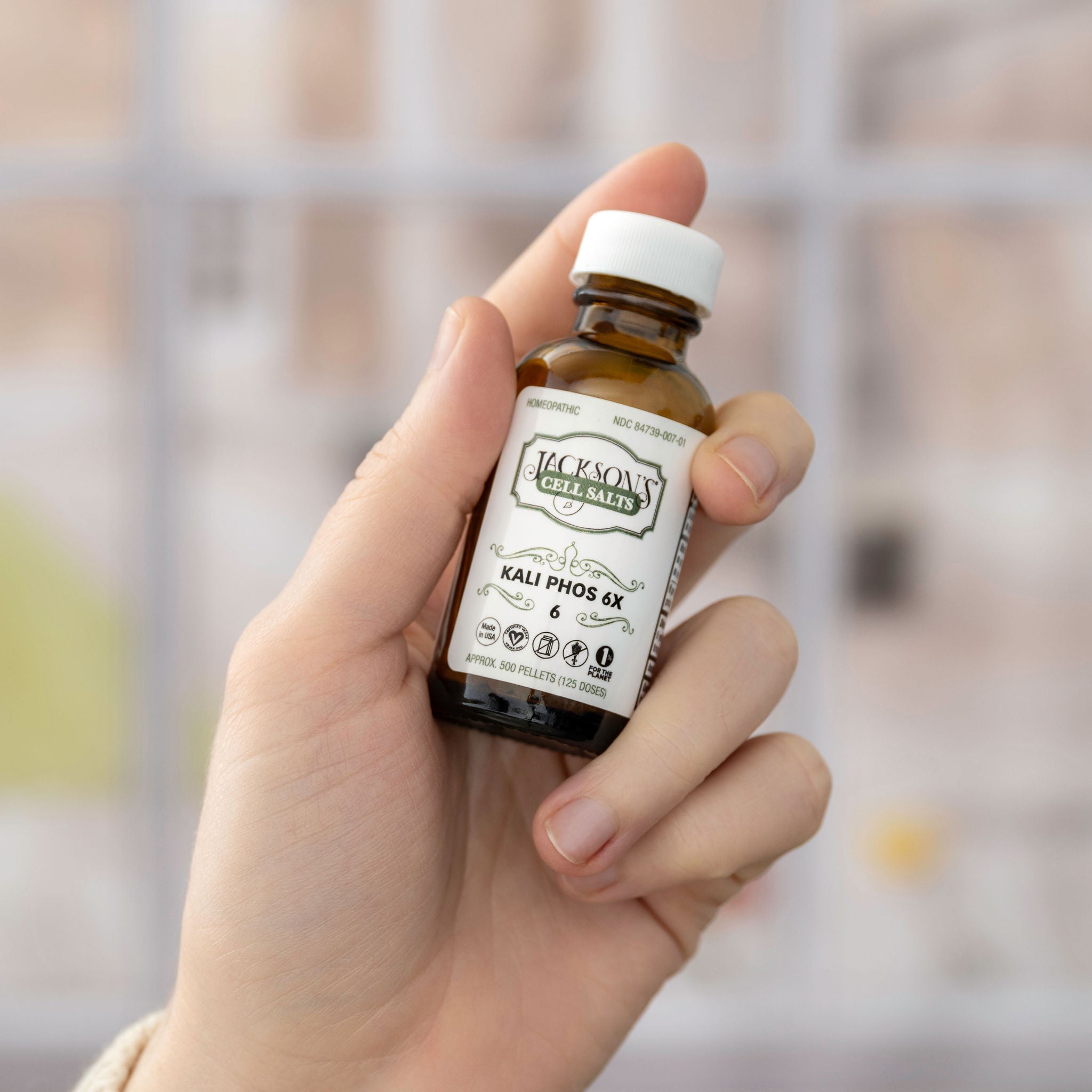
Kali Phosphoricum — Pour le burn-out numérique et l'épuisement mental
Kali Phos est peut-être le sel de Schüssler le plus connu pour l'épuisement nerveux et la fatigue mentale.
Traditionnellement, il est associé au sentiment d'épuisement mental après un stress prolongé, une surstimulation ou une pression émotionnelle.
Schémas courants traditionnellement associés à Kali Phos
- Burn-out mental
- Brouillard mental
- Épuisement émotionnel
- Difficulté à se concentrer
- Irritabilité due au stress
- Sensation d'avoir le cerveau « grillé »
- Difficulté à déconnecter après une stimulation
Ce schéma est courant chez les personnes qui passent de longues heures à :
- travailler en ligne,
- faire du multitâche,
- s'occuper d'autrui,
- consommer de l'information,
- ou rester constamment connecté.
Beaucoup de gens décrivent cet état comme étant fatigué tout en étant incapable de se détendre complètement.
Magnesia Phosphorica — Pour la tension et le stress accumulés dans le corps
Le stress numérique n'est pas seulement mental. Il est souvent profondément physique également.
Beaucoup de gens retiennent inconsciemment le stress dans leur corps par :
- des tensions dans la mâchoire,
- des raideurs au cou,
- des maux de tête,
- une respiration superficielle,
- et des tensions musculaires.
Mag Phos est traditionnellement associé aux tensions, aux spasmes et à l'inconfort lié au stress.
Schémas traditionnellement associés
- Sensation d'être sous tension
- Maux de tête liés au stress
- Serrage de mâchoire
- Tensions au cou et aux épaules
- Irritabilité nerveuse
- Difficulté à se détendre après une stimulation
Ce schéma est particulièrement courant après de longues journées passées assis, à faire défiler des pages ou à fixer des écrans.
Natrum Muriaticum — Pour la surcharge émotionnelle et le retrait
L'exposition constante à la messagerie, aux réseaux sociaux, aux actualités et au contenu émotionnel peut laisser certaines personnes émotionnellement submergées, tout en ayant envie de se retirer.
Nat Mur est traditionnellement associé à la réserve émotionnelle, à la sensibilité et au stress intériorisé.
Schémas émotionnels courants traditionnellement associés à Nat Mur
- Épuisement émotionnel
- Retrait après une surstimulation
- Sensation d'être submergé émotionnellement
- Difficulté à exprimer ses émotions
- Sensibilité cachée derrière l'indépendance
Ce schéma est souvent observé chez les personnes hautement sensibles qui absorbent profondément le stress émotionnel mais le traitent en privé.
Calcarea Phosphorica — Pour l'épuisement mental et la récupération
Calc Phos est traditionnellement associé à la reconstruction et à la récupération après des périodes de stress ou d'épuisement.
Ce schéma peut apparaître après de longues périodes de :
- surmenage,
- études,
- parentalité,
- soins à autrui,
- stress émotionnel,
- ou effort mental prolongé.
Schémas traditionnellement associés
- Fatigue mentale
- Sensation d'épuisement émotionnel
- Découragement
- Difficulté à retrouver de l'énergie
- Faible résilience après le stress
Cet état ressemble souvent moins à un burn-out aigu qu'à un drainage lent des réserves émotionnelles et mentales au fil du temps.
Natrum Phosphoricum — Pour l'irritabilité et la surcharge
Tout stress du système nerveux ne se traduit pas par de l'épuisement. Il se manifeste parfois par de la frustration, de l'irritabilité, de l'impatience ou une surcharge émotionnelle.
Nat Phos est traditionnellement associé à la réactivité émotionnelle lors de périodes de stress et de déséquilibre.
Schémas traditionnellement associés
- Irritabilité
- Frustration émotionnelle
- Sensation d'être surstimulé
- Surcharge mentale
- Tempérament colérique en cas de stress
- Difficulté à traiter la pression émotionnelle
Ce schéma est de plus en plus courant dans les environnements rapides où le système nerveux a rarement le temps de se réinitialiser.
Silica — Pour les personnes sensibles et mentalement épuisées
Certaines personnes sont naturellement plus sensibles à la surstimulation et à la pression.
Silica est traditionnellement associé à la sensibilité, à la fatigue mentale et à une pression interne calme.
Schémas traditionnellement associés
- Épuisement mental dû à un effort prolongé
- Sensibilité à la critique ou au stress
- Sensation d'être accablé par la pression
- Perfectionnisme discret
- Faible confiance en soi malgré les compétences
Ce schéma est souvent observé chez les personnes consciencieuses qui continuent de se dépasser bien après que l'épuisement a commencé à s'installer.
Moyens simples d'utiliser les sels de Schüssler pendant les périodes de stress
Les gens intègrent souvent les sels de Schüssler dans leurs routines de bien-être quotidiennes durant les périodes exigeantes ou stressantes sur le plan mental.
Quelques approches courantes incluent :
- Garder des sels de Schüssler sur un bureau pendant les journées de travail
- Les utiliser pendant les périodes d'exposition intensive aux écrans
- Les prendre pendant les périodes émotionnellement exigeantes
- Soutenir la récupération après un stress prolongé
- Les combiner avec l'hydratation, le sommeil, le mouvement et des moments de déconnexion des écrans
Les sels de Schüssler sont souvent considérés comme faisant partie d'une approche plus large de soutien du système nerveux plutôt que comme une solution isolée.
Soutenir le système nerveux moderne
Le système nerveux n'a pas été conçu pour une stimulation constante.
Créer de petits moments de repos tout au long de la journée peut faire une différence significative. Beaucoup de gens tirent profit de :
- réduire le temps d'écran lorsque c'est possible,
- faire des pauses dans les notifications,
- améliorer les habitudes de sommeil,
- passer du temps à l'extérieur,
- ralentir mentalement,
- et accorder au corps des périodes de repos véritable.
Le repos n'est pas de la paresse et la récupération n'est pas de la faiblesse. L'épuisement mental est souvent un signal que le corps et l'esprit ont besoin de soutien.
Réflexions finales
Les défis de la vie numérique sont bien réels.
Beaucoup de gens se sentent aujourd'hui chroniquement surstimulés, mentalement fatigués, émotionnellement dépassés et déconnectés d'un repos véritable.
Les schémas traditionnels associés aux sels de Schüssler offrent une perspective intéressante sur la façon dont le stress prolongé et la surstimulation peuvent affecter le bien-être émotionnel et physique.