The Hidden Emotional Patterns of the 12 Cell Salts
Note: Cell salts are a complementary approach and are not intended to replace medical care. If you have ongoing or severe symptoms, consult with a qualified healthcare professional.
When most people think about cell salts, they think about physical symptoms like muscle cramps, fatigue, digestion, skin concerns, or immune support.
But traditionally, classical homeopaths also observed emotional and mental patterns connected with each of the 12 tissue salts.
Long before phrases like burnout, nervous system dysregulation, and emotional overload became common, these patterns were already being described through the lens of mineral balance and constitutional support.
While cell salts are not a substitute for professional medical or mental health care, many people are drawn to them as part of a more holistic approach to emotional wellness and stress support.
Interestingly, the emotional themes associated with each cell salt often feel remarkably relevant to modern life.
From chronic overstimulation and perfectionism to emotional withdrawal, exhaustion, and sensitivity, the emotional side of cell salts offers a fascinating perspective on how stress can affect both mind and body.
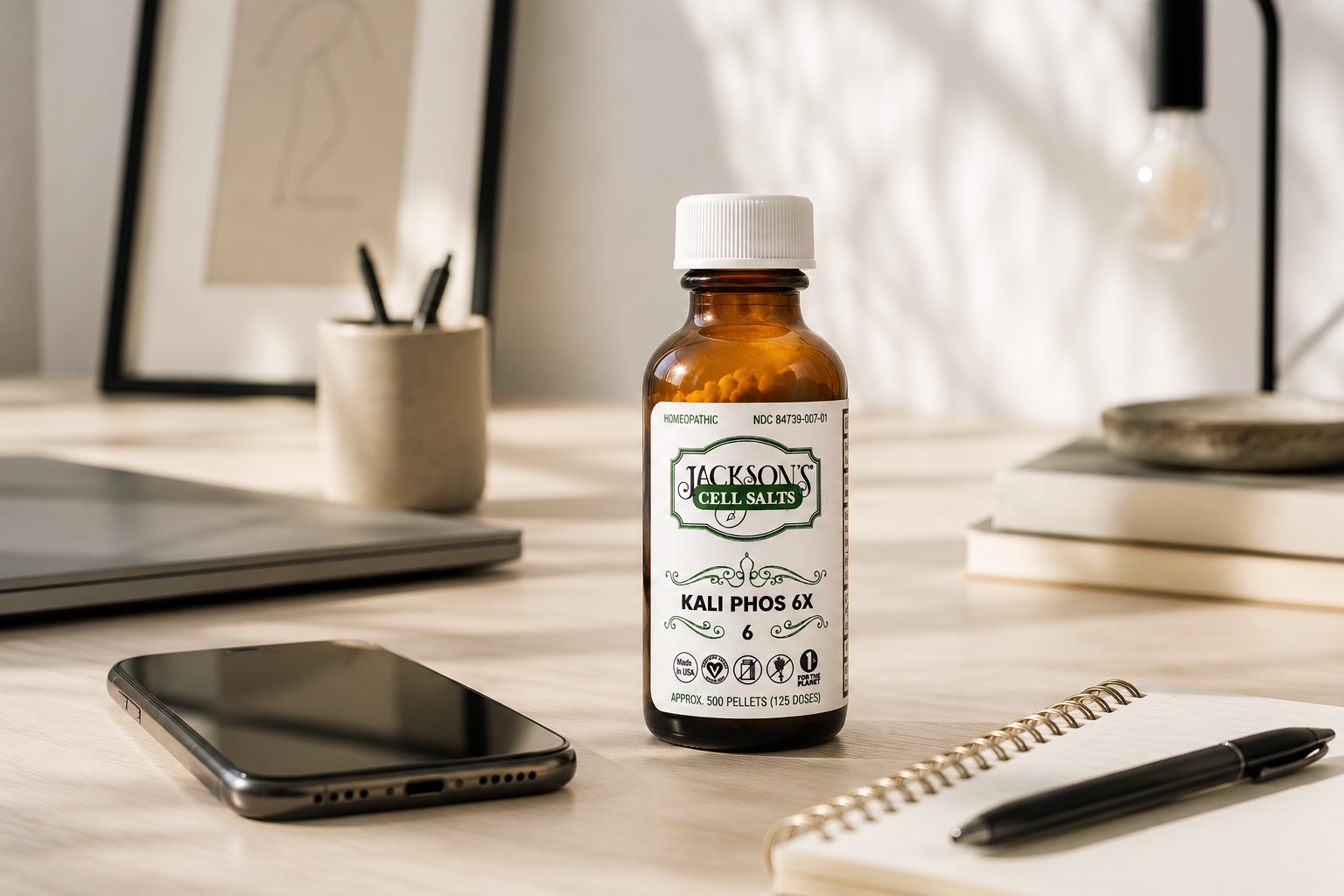
Kali Phosphoricum — The Burnout Cell Salt
Kali Phos is often associated with nervous exhaustion and mental fatigue.
This is the person who keeps functioning long after their system is overwhelmed. They may appear capable on the outside while internally feeling depleted, overstimulated, or emotionally fragile.
Emotional Patterns Traditionally Associated with Kali Phos
- Burnout
- Mental exhaustion
- Emotional overwhelm
- Irritability from stress
- Sensitivity to noise or stimulation
- Feeling emotionally “fried”
- Difficulty recovering after prolonged stress
Modern Lifestyle Triggers
- Constant screen exposure
- Multitasking
- Caregiving exhaustion
- Emotional labor
- Chronic sleep deprivation
- High-pressure work environments
Kali Phos is often discussed in relation to modern nervous system overload and the feeling of always being “on.”
Natrum Muriaticum — The Emotionally Guarded Salt
Nat Mur is traditionally linked with emotional reserve, grief, and internalized emotions.
Rather than expressing vulnerability openly, this pattern often involves quietly carrying emotional pain while appearing composed and self-sufficient.
Emotional Patterns Traditionally Associated with Nat Mur
- Difficulty opening up emotionally
- Suppressed grief
- Emotional withdrawal
- Hypersensitivity hidden behind independence
- Dwelling on past emotional wounds
- Feeling misunderstood
Modern Expressions
- Saying “I’m fine” while emotionally overwhelmed
- Isolating during difficult periods
- Struggling to ask for help
- Becoming emotionally self-protective
This pattern is often seen in highly capable individuals who carry a great deal internally.
Calcarea Fluorica — The Pattern of Rigidity and Control
Calc Fluor is traditionally associated with structure, elasticity, and tension, both physically and emotionally.
Emotionally, this pattern may appear as rigidity, perfectionism, or a strong need to maintain control.
Emotional Patterns Traditionally Associated with Calc Fluor
- Perfectionism
- Difficulty relaxing
- Resistance to change
- Holding tension internally
- Fear of vulnerability
- Feeling responsible for everything
People fitting this pattern may appear stable and dependable while privately struggling with chronic tension and pressure.
Magnesia Phosphorica — The Stress and Tension Salt
Mag Phos is commonly associated with tension, spasms, and stress-related discomfort.
Emotionally, this pattern often reflects internal pressure and suppressed stress responses.
Emotional Patterns Traditionally Associated with Mag Phos
- Emotional tension
- Difficulty unwinding
- Stress held physically in the body
- Irritability under pressure
- Feeling tightly wound
- Overreacting after prolonged stress
Common Physical-Emotional Patterns
- Jaw clenching
- Neck tension
- Stress headaches
- Nervous stomach tension
Many people today experience this “always bracing” state without realizing how deeply stress has affected their nervous system.
Calcarea Phosphorica — Emotional Depletion and Discouragement
Calc Phos is traditionally associated with growth, rebuilding, and recovery.
Emotionally, this pattern may involve depletion, discouragement, or difficulty recovering after periods of stress or transition.
Emotional Patterns Traditionally Associated with Calc Phos
- Feeling emotionally drained
- Discouragement
- Restlessness during life transitions
- Difficulty feeling grounded
- Low resilience after stress
- Mental fatigue during growth periods
This state is often discussed in relation to growing children, students, caregivers, or people rebuilding after burnout.
Silicea — Quiet Sensitivity Beneath the Surface
Silicea is often associated with sensitivity, insecurity, and low confidence despite capability.
This pattern may involve people who are deeply conscientious yet quietly doubt themselves.
Emotional Patterns Traditionally Associated with Silicea
- Lack of confidence
- Fear of failure
- Oversensitivity to criticism
- Perfectionism mixed with self-doubt
- Feeling mentally fragile under pressure
- Quiet withdrawal
Silicea personalities are often highly capable but may push themselves excessively while privately feeling inadequate.
Natrum Phosphoricum — Irritability and Emotional Overload
Nat Phos is traditionally linked with balance and acidity.
Emotionally, this pattern may appear as irritability, frustration, or emotional reactivity when overwhelmed.
Emotional Patterns Traditionally Associated with Nat Phos
- Irritability
- Emotional frustration
- Feeling overstimulated
- Difficulty processing stress
- Short temper during overwhelm
- Emotional “heaviness”
This state may become more noticeable during periods of poor diet, stress, digestive imbalance, or emotional overload.
Kali Sulphuricum — Feeling Stuck and Needing Change
Kali Sulph is traditionally associated with movement, oxygenation, and change.
Emotionally, this pattern may appear when someone feels stagnant, restless, or emotionally trapped.
Emotional Patterns Traditionally Associated with Kali Sulph
- Restlessness
- Dissatisfaction
- Feeling emotionally stuck
- Desire for change
- Mood fluctuations
- Difficulty staying engaged
This pattern often appears in people who feel mentally stagnant, creatively blocked, or disconnected from inspiration.
The Emotional Side of Stress and Mineral Balance
Modern life places enormous pressure on the nervous system.
Chronic stress, emotional suppression, overstimulation, poor sleep, constant connectivity, and emotional labor can affect both physical and emotional wellbeing in profound ways.
Traditional cell salt systems approached health holistically, recognizing that emotional states and physical symptoms often overlap.
Whether viewed symbolically, energetically, or nutritionally, many people find these emotional patterns surprisingly relatable.
Sometimes emotional exhaustion is not simply a personality trait or personal weakness.
Sometimes it is the body asking for support, rest, nourishment, and restoration.
Final Thoughts
The emotional patterns traditionally associated with the 12 cell salts offer an interesting lens through which to view stress, resilience, and emotional wellbeing.
Rather than labeling emotions as flaws, this perspective encourages greater awareness of how emotional strain may affect the whole person mentally, emotionally, and physically.
While cell salts are not intended to diagnose, treat, or replace professional care, many people appreciate them as part of a broader wellness approach focused on balance, self-awareness, and nervous system support.
Perhaps the most valuable lesson from the cell salt tradition is this:
Our emotional patterns are often signals, not failures.
|
Cell Salt |
Core Emotional Pattern |
Common Modern Expression |
Often Associated With |
|
Kali Phosphoricum |
Burnout and nervous exhaustion |
Feeling mentally “fried,” overstimulated, emotionally fragile |
Chronic stress, screen overload, caregiving, lack of sleep |
|
Natrum Muriaticum |
Emotional withdrawal and suppressed grief |
Saying “I’m fine” while struggling internally |
Emotional stress, heartbreak, isolation, internalizing emotions |
|
Calcarea Fluorica |
Rigidity and perfectionism |
Feeling responsible for everything, difficulty relaxing |
Chronic tension, control patterns, fear of vulnerability |
|
Magnesia Phosphorica |
Stress and internal tension |
Feeling tightly wound or unable to unwind |
Stress headaches, jaw clenching, nervous tension |
|
Calcarea Phosphorica |
Emotional depletion and discouragement |
Feeling drained during periods of growth or change |
Burnout recovery, transitions, mental fatigue |
|
Silicea |
Quiet insecurity beneath competence |
Highly capable but privately self-doubting |
Oversensitivity, perfectionism, fear of failure |
|
Natrum Phosphoricum |
Irritability and emotional overwhelm |
Short temper when overstimulated or stressed |
Digestive stress, emotional overload, frustration |
|
Kali Sulphuricum |
Restlessness and stagnation |
Feeling stuck, uninspired, or craving change |
Creative burnout, emotional stagnation, mood fluctuations |
|
Ferrum Phosphoricum |
Early stress and emotional sensitivity |
Feeling run down after emotional or physical strain |
Low resilience, stress sensitivity, exhaustion |
|
Kali Muriaticum |
Emotional suppression and withdrawal |
Holding emotions in and avoiding confrontation |
Unexpressed emotions, internal tension |
|
Calcarea Sulphurica |
Emotional frustration and lingering stress |
Difficulty letting things fully resolve emotionally |
Emotional buildup, irritability, unresolved tension |
|
Natrum Sulphuricum |
Heaviness and emotional gloom |
Feeling emotionally weighed down or stuck in negativity |
Seasonal mood shifts, emotional heaviness, stress overload |